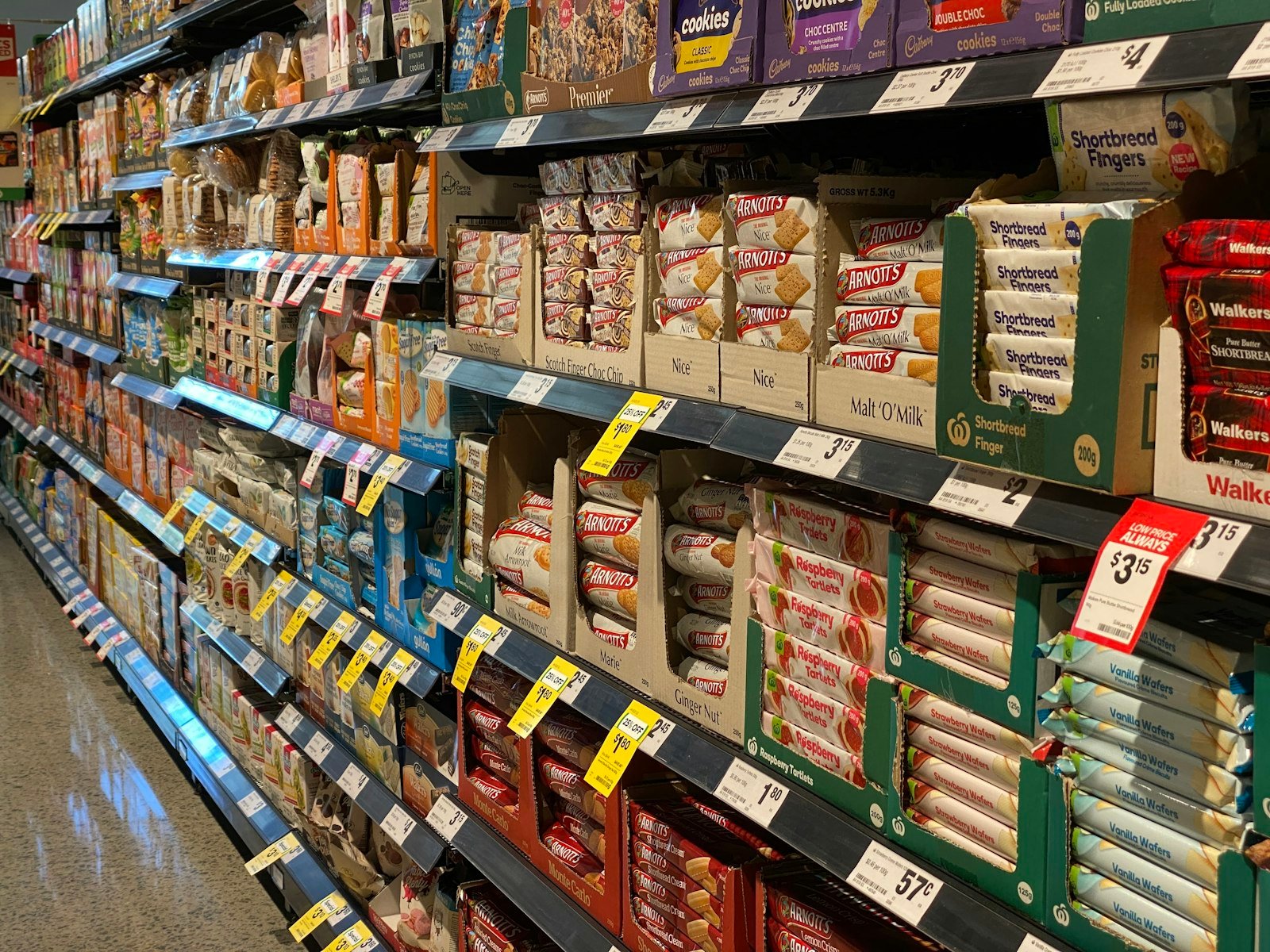
Computer Vision Platform Transforms Retail Image Analysis for a Consumer & Packaged Goods Company
The Challenge
The company set out to change how it analyzes retail imagery. The goal was a centralized system for collecting and analyzing images from retail environments and internal processes, to streamline image use, surface insights into product presentation, monitor compliance, and strengthen sales execution. By consolidating images and automatically extracting detailed information, the project aimed to reduce manual effort, improve efficiency in auditing and incentive grading, and enable richer analytics for business decisions across four key use cases:
- SKU detection
- Placement type detection
- Price visibility
- Brand visibility
Delivering this raised several technical and operational hurdles:
- Low accuracy from initial approaches: Early methods fell well short of the required precision. Few-shot prompting reached 52% accuracy and vector search reached 45% for equipment detection, while vector search reached only 1% for SKU detection.
- GPU dependency: The main pipeline runs as a Cloud Run job, which lacks GPU support, yet SAM3 requires a GPU. Integrating it into the pipeline was therefore a significant obstacle.
- Rising data costs: The high volume of insertions of image predictions into BigQuery drove up costs.
The Solution
We took an iterative, use-case-specific approach, testing and refining methods until each reached a production-worthy level of accuracy.
Equipment Detection
- Few-shot prompting and vector search were tested first, but neither delivered the required results.
- We then fine-tuned a YOLOv8 model, which reached 94% accuracy.
SKU Detection
- Vector search proved ineffective, at only 1% accuracy.
- We moved to a combined SAM3 and Gemini approach, which delivered strong results.
- To resolve the GPU constraint, the SAM3 model was deployed as a dedicated endpoint that the pipeline can call.
Price and Brand Visibility
- Both use cases rely on few-shot prompting, which delivers accuracy of 80% for price visibility and 85% for brand visibility.
Cost Optimization
- We introduced batch processing to reduce the volume of BigQuery insertions.
- We also added cache cleaning when loading the model, which reduced costs significantly.
Value Delivered
- High-accuracy detection: Fine-tuned YOLOv8 reached 94% accuracy for equipment detection, and the SAM3 and Gemini approach reached about 90% for SKU detection.
- Reliable visibility analysis: Few-shot prompting delivered 80% accuracy for price visibility and 85% for brand visibility.
- Significant cost reduction: Batch processing and cache management cut the BigQuery costs generated by high-volume prediction inserts.
- Centralized image intelligence: The system consolidates retail imagery and automatically extracts detailed information, enabling richer analytics on product presentation and compliance.
- Less manual effort: Automated extraction supports more efficient auditing and incentive grading.